
Crimson Veil Portrait
AI prompt for ChatGPT ·
About this prompt
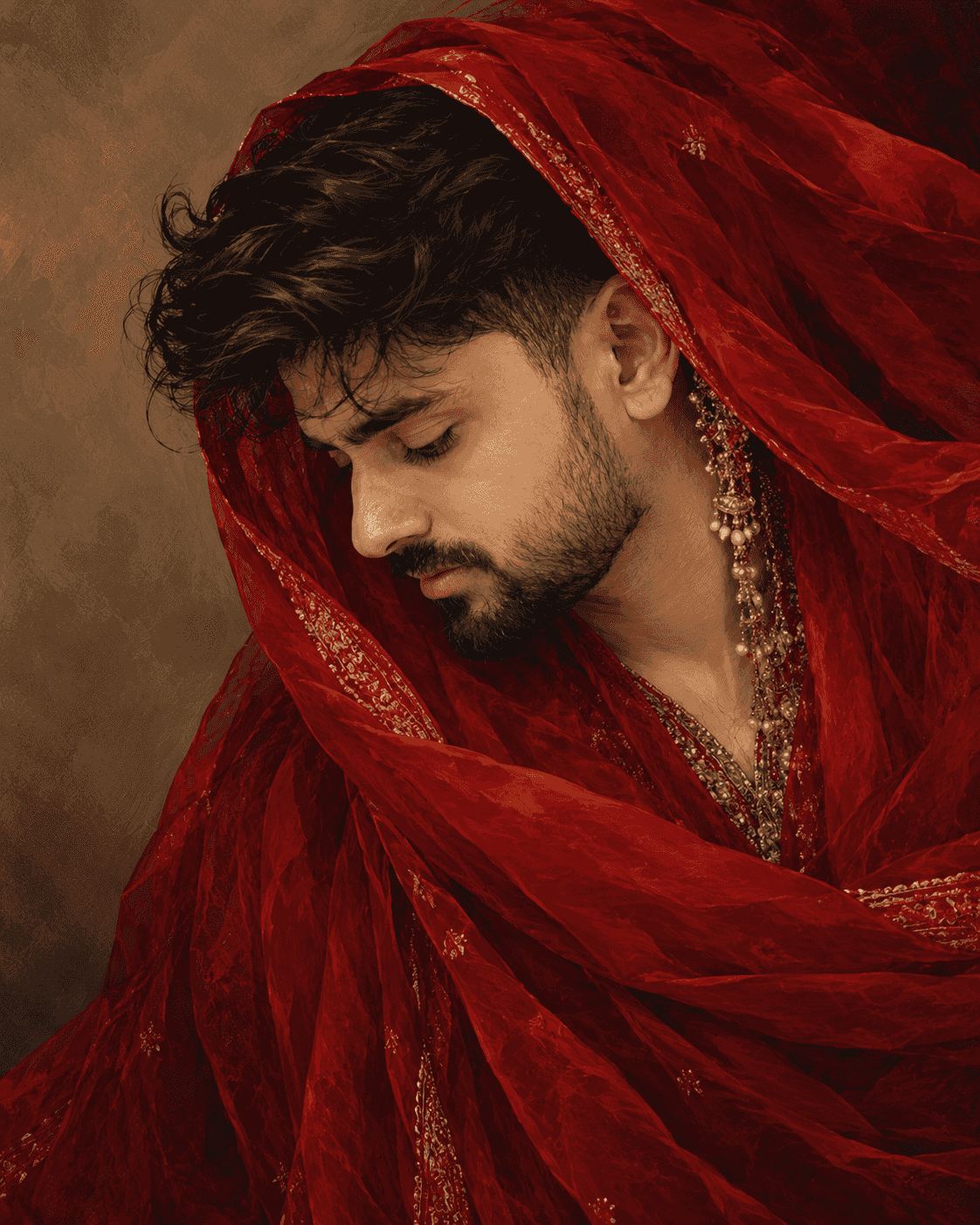
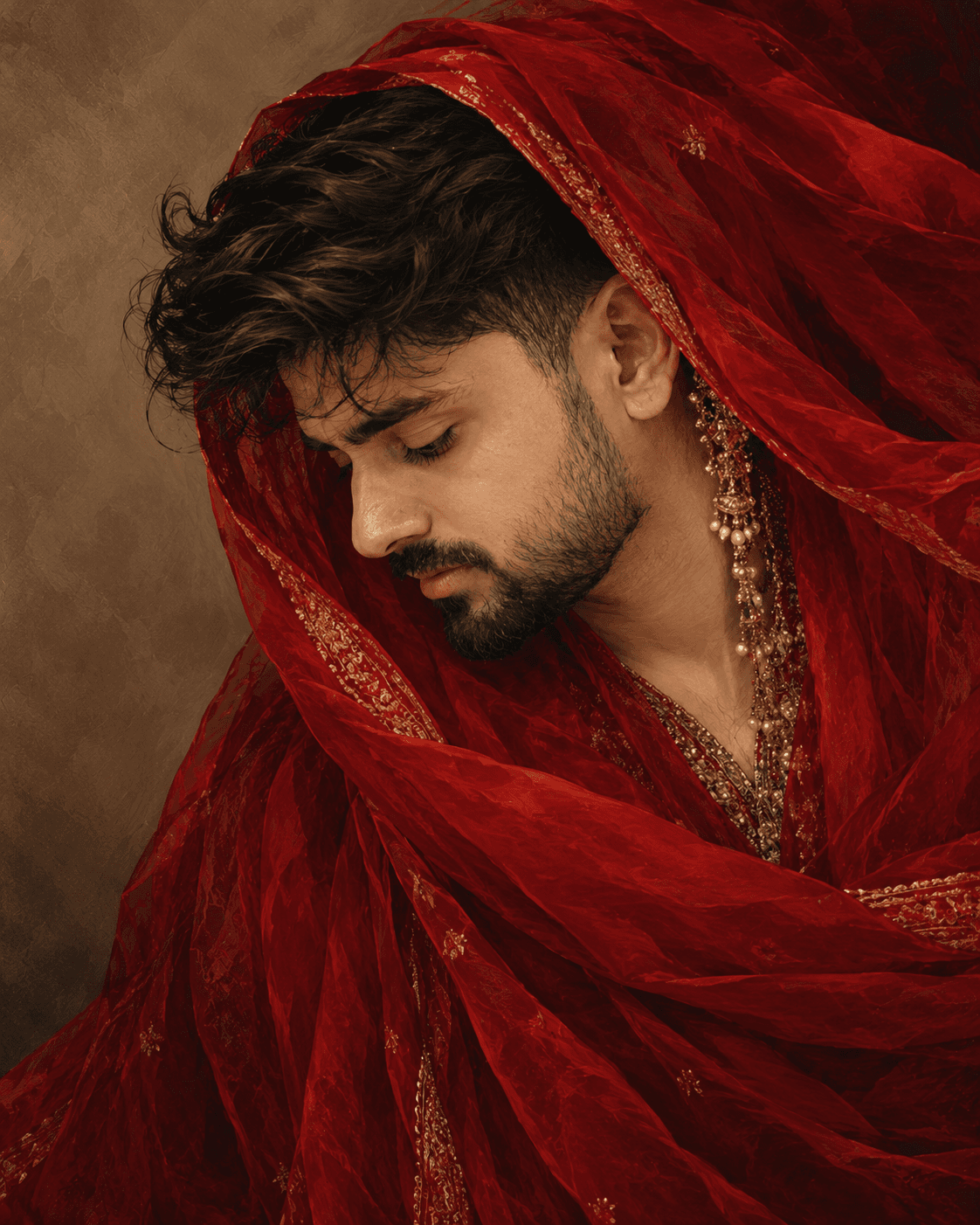
Create a crimson veil portrait with ChatGPT using your photo, flowing red fabric, traditional gold jewellery, a bowed pose and warm painterly editorial styling.
How to use this prompt
- Open ChatGPT and select the image-generation feature.
- Upload your own photo and the reference image. Make sure both images are attached.
- Copy the complete prompt and paste it into the message box.
- Generate the portrait and check that your facial identity remains recognizable.
- If the fabric or pose differs from the reference, ask ChatGPT to adjust the draping and head angle without changing your face.
- Keep “Aspect ratio 4:5, vertical” in the prompt and select a matching portrait ratio in the image settings if available.
Tip: Use a deeper burgundy veil or a muted terracotta background.
Known limitations
- Facial identity may change slightly when converting a photograph into a painterly illustration.
- Closed eyes and a three-quarter profile may make exact facial matching more difficult.
- Intricate gold jewellery and layered fabric folds may contain small visual inconsistencies.
- The final crop and aspect ratio may vary depending on the image-generation settings.
Customize Parameters
Fill in the fields below to customize your prompt
Live Compiled Prompt4494 chars
Use the uploaded user photo as the ONLY source of the main subject’s identity and facial appearance. Preserve the user's recognizable identity with maximum fidelity, including face shape, facial proportions, forehead, hairline, eyebrows, natural eye shape and spacing, nose, lips, cheeks, cheekbones, jawline, chin, skin tone, natural skin texture, facial hair if present, and distinctive facial characteristics.
The user photo determines WHO the person is. Do not replace, blend, beautify, age, de-age, slim, reshape, or reinterpret the person's identity. The reference image controls the scene, pose, expression, gaze, styling, composition, lighting, and artistic treatment, but not the subject's identity.
Create a highly detailed vertical 4:5 digital editorial portrait illustration closely recreating the reference composition. Show the subject in a close chest-up/upper-torso composition, positioned predominantly toward the right and centre of the frame, with the body angled slightly away from the viewer and the head lowered into a gentle three-quarter side profile.
The subject's head is bowed downward, with the chin slightly lowered, creating an introspective, peaceful, emotionally subdued mood. Reconstruct the reference facial expression: eyes softly closed or nearly closed, gaze directed downward beneath the eyelids, relaxed eyebrows, and closed natural lips with a subtle calm and melancholic expression. The user’s original expression, gaze, and head position should be adapted to the reference pose while retaining the user's recognizable facial structure.
Frame the face prominently from the upper forehead and head through the neck and upper torso, with the face angled diagonally downward toward the lower-left portion of the image.
Surround and partially frame the head with abundant flowing deep-crimson/red fabric, closely resembling a traditional draped veil or sari pallu. The red fabric should sweep over and around the top of the head, forming a large flowing shape across the upper-right portion of the frame, then curve around the face and neck before continuing downward across the lower-right and lower-centre areas.
Preserve the layered folds, soft fabric volume, overlapping drapery, subtle wrinkles, and sweeping organic contours of the reference. Keep the user's identity visible and recognizable through the opening in the fabric. Include naturally visible hair around the forehead or temple where appropriate to the user's identity.
Recreate the delicate ornamental accessory visible near the ear and neck region: intricate gold-toned traditional jewellery with fine decorative patterns and small hanging bead-like elements. Adapt the accessory naturally to the subject without changing their identity.
Use a muted warm taupe/brown plain background with no scenery, architecture, text, logos, or distracting objects. The background should be smooth and understated, creating strong contrast against the saturated red fabric.
Use a sophisticated limited palette dominated by deep crimson, burgundy, muted terracotta, warm brown, beige, and soft taupe.
Recreate the reference's stylized semi-realistic digital painting and editorial illustration aesthetic: realistic facial anatomy and recognizable identity combined with painterly layered brushwork, simplified tonal planes, controlled edges, subtle linework, and elegant graphic colour blocking.
Skin should retain natural texture and believable facial structure but be rendered with refined illustrated shading rather than photographic skin pores. Use dimensional shading across the forehead, eyelids, nose bridge, cheek, lips, jaw, and neck, with warm brown-red reflected tones from the surrounding fabric.
Lighting should be soft, warm, diffused, and directional enough to create gentle facial modelling, with deeper crimson shadows beneath and around the red fabric. Avoid harsh highlights or dramatic studio lighting.
Preserve the intimate, quiet, poetic atmosphere. The composition should feel like a premium fashion/editorial art portrait with a handcrafted digital-painting finish.
Maintain accurate proportions, natural anatomy, believable fabric physics, subtle depth between foreground veil and face, and carefully controlled negative space.
Do not add text, typography, watermark, border, extra people, scenery, modern objects, or unrelated decorations. Do not make the result photorealistic; preserve the refined painterly illustration character.
Aspect ratio 4:5, vertical.
Related Prompts
Discover more ChatGPT prompt templates with output previews and customizable fields.